A Python Web Development Course: The Ultimate Guide to Mastering Django and Databases
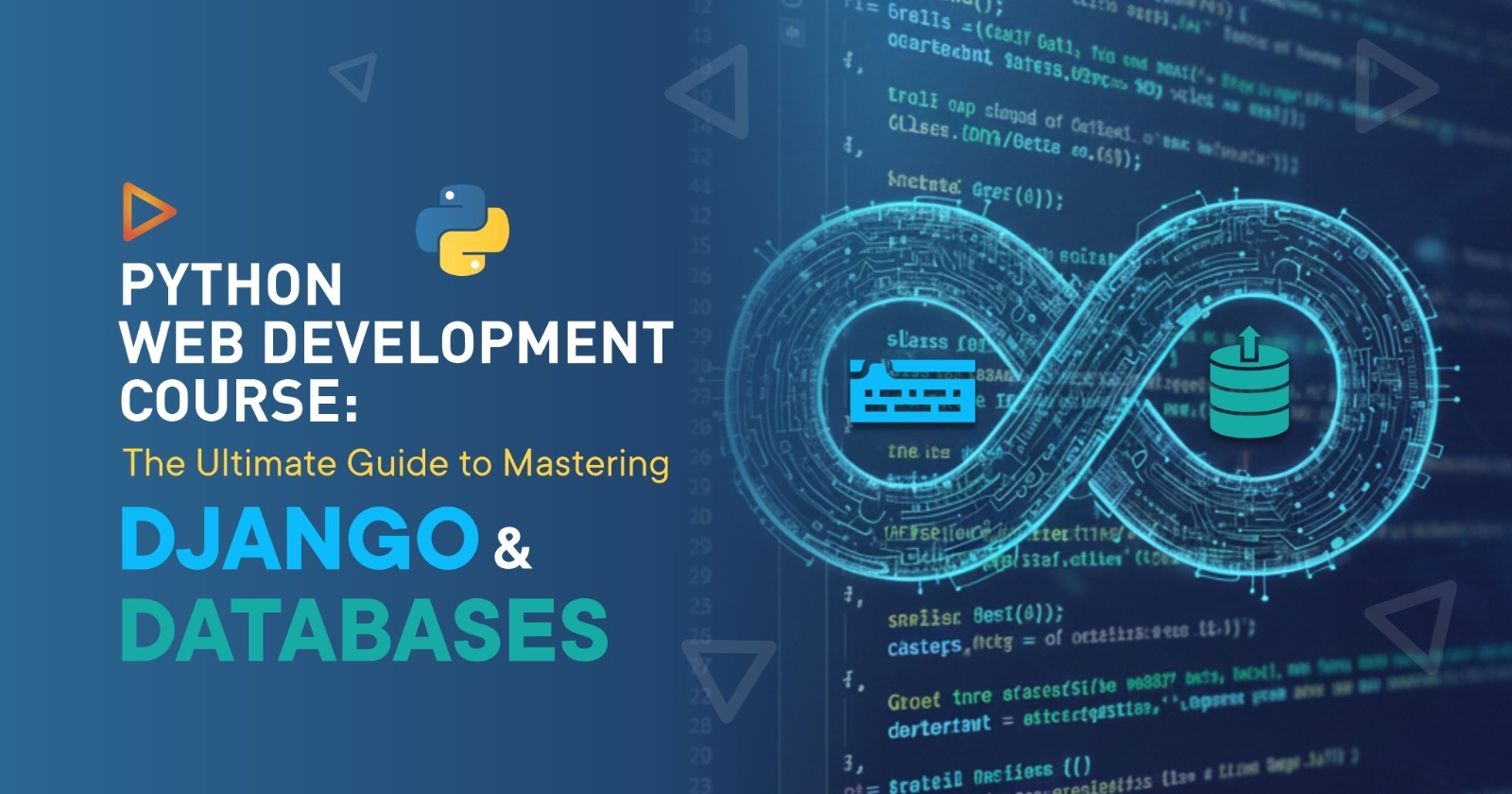
If you're in Mehsana and looking at the tech world, you know it's important to have a strong foundation. You might understand the theory, the logic, and data structures. But have you felt it: that gap between knowing something and doing something? How do you take your knowledge and turn it into a live, functioning web application that an employer will notice?
The answer is practical, project-based learning. And in today's tech landscape, one of the fastest, most powerful, and most in-demand bridges from learner to professional developer is a Python Web Development Course.
Python isn't just for data science or scripting. It's the engine behind giants like Instagram, Spotify, and Netflix. Its simple, readable syntax makes it a joy to learn, but its powerful frameworks make it a force to be reckoned with. This guide breaks down how a structured course helps you master two of its most critical components: the Django framework and databases.
Why Python for Web Development? It's All About Speed and Power
For years, Python has dominated the web, and its popularity only continues to grow. But why?
- Readability: Python's clean syntax reads almost like English. This means less time debugging syntax errors and more time building features.
- Massive Community: If you have a problem, someone has already solved it and probably posted the answer online. This community support is priceless.
- Vast Libraries: Python's "batteries-included" philosophy means there's a pre-built package for almost anything, from user authentication to complex image processing.
- Scalability: Python (especially with frameworks like Django) is built to scale. It can handle a hobby project with 10 users or a massive platform with 10 million.
For anyone looking to build a portfolio, this is the perfect combination. A quality Python Web Development Course leverages these strengths, getting you from a blank screen to a deployed application faster than you'd think.
The "Full Stack" Explained: What is Django?
You hear "full stack" all the time. It simply means you're comfortable working on both the "front-end" (what the user sees, like HTML, CSS, and JavaScript) and the "back-end" (the server, database, and logic that make it all work).
This is where Django comes in.
Django is a high-level Python web framework that encourages rapid development and clean, pragmatic design. Think of it as a master toolkit for building the back-end. Instead of you having to build a user login system, a comments section, or an admin panel from scratch (which is incredibly difficult and time-consuming), Django provides these components for you, already built and secured.
To learn Django for web development is to learn how to build powerful applications efficiently. A good Python Web Development Course won't just teach you what Django is; it will guide you through its MVT (Model-View-Template) architecture, the 'blueprint' Django uses, showing you how to build complex, data-driven websites fast.
The Heart of Every Application: Mastering Databases
A web application without data is just a pretty brochure. The real power comes from what you store: user profiles, blog posts, product inventories, high scores, or social media comments. All of this lives in a database.
But interacting with a database can be complex. You have to write precise SQL queries, handle connections securely, and structure your data correctly.
This is where a Python Web Development Course truly shines. Django comes with a powerful feature called an ORM (Object-Relational Mapper). Here’s what that means in simple terms:
Instead of writing complex SQL code, you get to write simple Python code.
The ORM acts as a translator. You tell it, "Hey, go get all the users from my database who signed up last week," using a Python command. The ORM translates that into perfect, secure SQL, fetches the data, and hands it back to you as a clean Python object.
A comprehensive course will teach you:
- SQL Databases: How to design and manage relational databases like PostgreSQL or MySQL, the industry standard for structured data.
- NoSQL Databases: How to use databases like MongoDB for flexible, non-structured data, which is common in modern apps.
- The Django ORM: How to create, retrieve, update, and delete data using Python's most powerful tool.
What a Great Python Web Development Course Must Include
So, you're ready to sign up. But what makes a course truly effective? If you're wondering what is the best way to learn Django and databases, the answer is a structured curriculum that includes these key modules:
- Core Python Fundamentals: You have to walk before you can run. A great course will start by refreshing your knowledge of Python's core concepts: variables, loops, functions, classes (OOP), and data structures.
- Front-End Essentials: You'll build the "front" of your full-stack application. This means mastering HTML for structure, CSS (and frameworks like Bootstrap) for styling, and JavaScript for interactivity.
- The Django Framework: A deep dive. You'll learn MVT architecture, URL routing, building forms, handling user authentication, and creating a secure admin panel.
- Database Management: You'll go beyond the ORM and learn how to design database schemas, write raw SQL queries when needed, and connect your Django app to databases like PostgreSQL and MongoDB.
- RESTful APIs: This is critical. You'll learn to build APIs (Application Programming Interfaces). This is how your web app "talks" to other apps, like a mobile app or a third-party service.
- Version Control (Git/GitHub): No developer works alone. You'll learn how to use Git to save your code, track changes, and collaborate with a team; a skill every single employer requires.
- Deployment: A project on your laptop is just a project. A project on the internet is a portfolio piece. You'll learn how to deploy your finished application to cloud services like AWS, Heroku, or PythonAnywhere.
- Real-World Capstone Projects: This is the most important part. A high-quality Python Web Development Course culminates in you building a complex, real-world project from scratch, like an e-commerce site, a social media clone, or a sophisticated blog.
From Mehsana to Full-Stack Pro
If you're in Mehsana, you are perfectly positioned. The tech industry is growing, and companies are desperately searching for developers who have practical, hands-on skills. While theory is vital, a portfolio of deployed projects is what truly gets you hired.
A dedicated Python Full Stack Developer Training in Mehsana can be your most direct path from the classroom to a career. It's an investment in your skills that bridges the exact gap employers are focused on. When you can show a hiring manager three live web applications you built yourself, the conversation changes from "What do you know?" to "When can you start?"
Your Next Steps with TCP India
Stop just learning theory. Start building. A structured, expert-led course is the fastest way to consolidate your knowledge and build a professional portfolio that stands out.
If you're ready to become a confident, job-ready full-stack developer, we highly recommend exploring a dedicated Python Web Development Course. Take the next step in your career by checking out the Python Full Stack Development course at TCP India.
Frequently Asked Questions (FAQ)
- Is Python still a good choice for web development today?
Absolutely. Python's use in AI, machine learning, and data science has only strengthened its web ecosystem. Frameworks like Django and Flask are mature, secure, and backed by a massive community. It remains one of the top-paying and most in-demand skills for back-end developers.
- I heard about Flask. Do I need to learn it if I learn Django?
No, not necessarily. Flask and Django are both excellent Python frameworks, but they have different philosophies. Django is "batteries-included," offering a complete, all-in-one solution (like an admin panel, ORM, etc.). Flask is a "micro-framework," meaning it's smaller, more flexible, and lets you add only the components you want. Most developers specialize in one or the other, and Django is often preferred for larger, database-heavy applications.
- How long does it take to learn Django and databases?
While you can learn the basics in a few weeks, "mastery" takes time. A structured Python Web Development Course is designed to accelerate this. In a few months of focused, project-based learning, you can go from a beginner to building and deploying complex, portfolio-worthy applications.
- Can I get a job with just a Python Web Development Course certificate?
The certificate is great, but the projects are what get you the job. A high-quality course (like the training offered at TCP India) focuses on building a strong, demonstrable portfolio. When you can walk into an interview and show them a live, functioning e-commerce site you built, you are proving your skills far more than any certificate ever could.
Leave Comments
Recent Post
Essential Database Skills Students Need for a Career in Tech
Sep 29, 2026

Essential Data Analysis Skills Students Need for a Career in Tech
Sep 21, 2026
Essential Skills Students Need to Start a Career in Mobile App Development
Sep 15, 2026
Skills Students Can Build Through MEAN Stack Development
Sep 07, 2026
What Students Can Build with a Python Web Development Course
Aug 24, 2026
Skills Students Build Through a Full Stack Python Developer Course
Aug 18, 2026
UI/UX Design vs UI/UX Development: What Is the Difference
Aug 11, 2026
What Can You Build with a Full Stack Website Development Course
Aug 05, 2026