How a .NET Full Stack Developer Course Builds Enterprise Skills
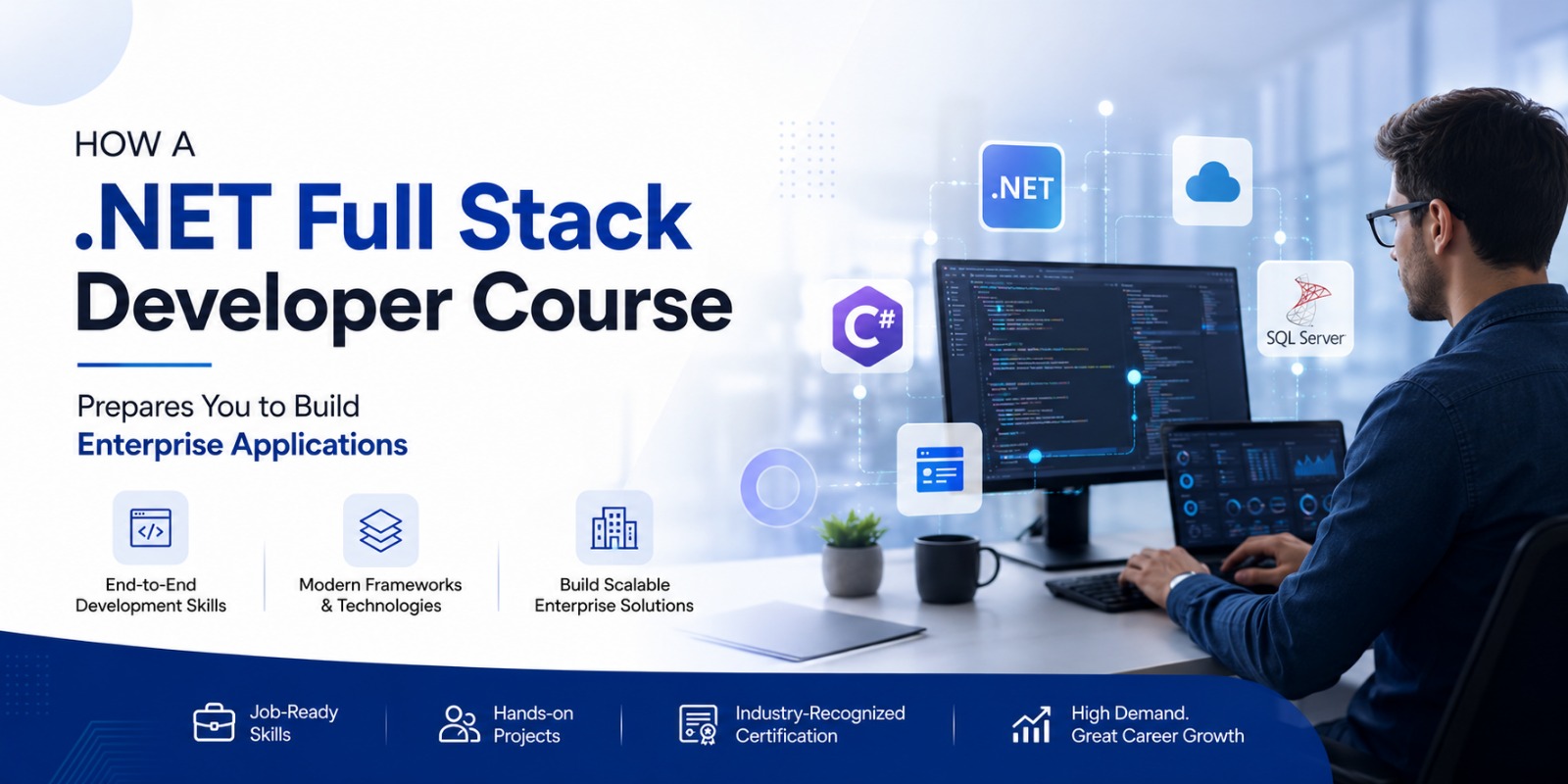
As businesses continue to digitise their operations, the demand for developers who can build secure, scalable, and high-performing software has grown significantly. A .NET Full Stack Developer Course equips aspiring developers with the technical knowledge and practical experience required to create enterprise applications used by organisations across industries.
Unlike basic programming courses that focus on individual technologies, a .NET Full Stack Developer Course provides comprehensive training in front-end development, back-end programming, databases, APIs, and deployment. This combination enables learners to understand the complete software development lifecycle and prepare for projects that solve real business challenges.
At TCP India, students learn through practical assignments, live projects, and guidance from experienced trainers, helping them develop the confidence and skills required to work on enterprise-level software solutions.
What Are Enterprise Applications?
Enterprise applications are software systems developed to support the daily operations of organisations. Unlike simple websites, these applications manage large amounts of business data, automate processes, and improve efficiency across departments.
Some common examples include:
- Employee Management Systems
- Customer Relationship Management (CRM) software
- Hospital Management Systems
- Inventory Management Software
- School and College Management Portals
- Banking and Financial Applications
These systems often serve hundreds or even thousands of users, making reliability, security, and performance essential.
Why Is .NET Preferred for Enterprise Application Development?
Many organisations choose Microsoft's .NET platform because it provides a reliable framework for developing enterprise-grade software.
Some key advantages include:
Security
Enterprise applications often handle confidential business and customer information. The .NET framework includes built-in security features such as authentication, authorisation, and data protection, helping developers create secure applications.
Scalability
As businesses grow, their software must be able to manage increasing numbers of users and transactions. Applications built using .NET can scale efficiently without compromising performance.
High Performance
Modern .NET technologies are designed to deliver fast response times and smooth user experiences, making them suitable for large-scale business applications.
Microsoft Ecosystem Integration
Many organisations already use Microsoft technologies such as Azure, SQL Server, Microsoft 365, and Active Directory. A . NET-based application integrates seamlessly with these platforms, simplifying business operations.
What Technologies Will You Learn in a .NET Full Stack Developer Course?
A well-structured .NET Full Stack Developer Course covers both front-end and back-end development, enabling students to build complete business applications.
Technology | Purpose |
C# | Core programming language |
ASP.NET Core | Backend web application development |
SQL Server | Database management |
Entity Framework Core | Database connectivity and ORM |
HTML, CSS & JavaScript | Front-end development |
REST APIs | Communication between applications |
Git & GitHub | Version control and collaboration |
Each technology plays an important role in building reliable enterprise software.
How Does Practical Training Prepare Students for Enterprise Projects?

Learning theory alone is not enough to become an industry-ready developer. Employers expect candidates to understand how software is developed in real business environments.
A practical .NET Full Stack Developer Course focuses on:
Project-Based Learning
Students build complete applications instead of only practising coding exercises. This helps them understand software architecture, debugging, testing, and deployment.
Team Collaboration
Enterprise software is rarely developed by one person. During training, students learn how to collaborate using version control systems, share code efficiently, and manage project updates.
Problem-Solving Skills
Every software project presents unique challenges. By working on practical assignments, students learn how to analyse problems, identify solutions, and write maintainable code.
Understanding Business Requirements
Developers must create software that meets organisational goals. Practical training teaches students how to translate business requirements into functional applications, an essential skill in enterprise development.
What Enterprise Applications Can Students Build?
A project-based .NET Full Stack Developer Course gives students the opportunity to develop applications similar to those used by real organisations.
Some examples include:
- Employee Attendance Management System
- Inventory and Stock Management Software
- Customer Relationship Management (CRM) System
- Hospital Management Application
- School or College Management Portal
- Online Appointment Booking System
These projects not only strengthen technical knowledge but also become valuable additions to a professional portfolio, demonstrating practical skills to prospective employers.
How TCP India Helps Students Become Enterprise-Ready Developers
Building enterprise applications requires more than technical knowledge. Developers need to understand industry standards, teamwork, software architecture, and best coding practices. At TCP India, a leading IT training institute in Mehsana, Gujarat, the .NET Full Stack Developer Course is designed to help students gain these practical skills through hands-on learning.
Students benefit from:
Industry-Oriented Curriculum
The course curriculum is regularly updated to match current industry trends and employer expectations. Students learn technologies and development practices that are widely used in enterprise software development.
Live Projects and Practical Assignments
Rather than focusing only on theory, students work on practical projects that simulate real business scenarios. This approach helps them understand how enterprise applications are planned, developed, tested, and maintained.
Learning Beyond the Classroom
A good learning experience goes beyond understanding syntax and programming concepts. Students benefit from discussions around real development challenges, coding practices, and project execution, helping them gain a broader perspective on how software is developed in professional environments.
Placement Support
Along with technical training, students receive guidance on interview preparation, resume building, and portfolio development, helping them become more confident while applying for software development roles.
Best Practices for Building Enterprise Applications
Enterprise software must be reliable, secure, and easy to maintain. During a .NET Full Stack Developer Course, students are introduced to development practices that improve software quality and long-term performance.
Some important best practices include:
- Writing clean and well-structured code
- Following secure authentication and authorisation methods
- Designing scalable database structures
- Testing applications before deployment
- Using version control systems such as Git
- Documenting code for easier maintenance
- Optimising application performance for better user experience
Understanding these practices helps students develop applications that meet professional standards expected by modern organisations.
Career Opportunities After Completing a .NET Full Stack Developer Course
A .NET Full Stack Developer Course opens the door to a wide range of career opportunities across industries. Since businesses of all sizes rely on enterprise software, skilled developers continue to be in demand.
Some common job roles include:
- .NET Full Stack Developer
- Software Developer
- ASP.NET Developer
- Backend Developer
- Web Application Developer
- Software Engineer
- API Developer
- Junior Technical Consultant
Industries such as banking, healthcare, education, manufacturing, retail, logistics, and IT services regularly recruit developers with full stack development skills to build and maintain enterprise applications.
Why Enterprise Development Skills Matter in Today's IT Industry
Businesses are investing heavily in digital transformation to improve efficiency and customer experience. As a result, organisations need developers who can build secure, scalable, and business-focused applications.
Learning enterprise development through a .NET Full Stack Developer Course not only strengthens technical skills but also helps students understand how software supports real business operations. This practical knowledge makes candidates more valuable to employers and improves their long-term career prospects.
Conclusion
A .NET Full Stack Developer Course is more than just learning programming languages and frameworks it equips students with the practical skills needed to build secure, scalable, and efficient enterprise applications. Through hands-on projects and real-world development practices, learners gain the confidence to tackle business challenges and prepare for successful careers in software development.
At TCP India, a trusted IT training institute in Mehsana, Gujarat, students benefit from industry-oriented training, live projects, and practical learning that help them become job-ready developers. If you're looking to build a strong foundation in enterprise application development, explore our .NET Full Stack Developer Course and take the first step towards a rewarding career in the IT industry.
To learn why practical experience plays a crucial role in shaping successful IT professionals, you can also read our blog, How Practical Training Makes Students Job-Ready, and discover how hands-on learning helps bridge the gap between classroom education and real-world software development.
Frequently Asked Questions
1. What is an enterprise application?
An enterprise application is software designed to support business operations, such as managing employees, customers, inventory, finance, or organisational processes. These applications are built to handle large amounts of data securely and efficiently.
2. Why is .NET widely used for enterprise application development?
The .NET platform is known for its security, scalability, performance, and seamless integration with Microsoft's ecosystem, making it a preferred choice for developing enterprise software across various industries.
3. What projects are included in a .NET Full Stack Developer Course?
Students typically build projects such as employee management systems, CRM software, inventory management systems, hospital management applications, and online booking portals to gain practical development experience.
4. Is a .NET Full Stack Developer Course suitable for beginners?
Yes. Most structured courses are designed for beginners and gradually introduce programming concepts, databases, web development, APIs, and full stack application development through practical learning.
5. Which industries hire .NET Full Stack Developers?
Industries including banking, healthcare, education, retail, manufacturing, logistics, government organisations, and IT services actively recruit .NET Full Stack Developers to build and maintain enterprise applications.
6. Why choose TCP India for a .NET Full Stack Developer Course in Mehsana?
TCP India offers practical training, experienced faculty, live projects, industry-oriented learning, and placement support to help students develop the technical and professional skills required for successful careers in software development.
Leave Comments
Recent Post
Essential Database Skills Students Need for a Career in Tech
Sep 29, 2026

Essential Data Analysis Skills Students Need for a Career in Tech
Sep 21, 2026

Essential Skills Students Need to Start a Career in Mobile App Development
Sep 15, 2026
Skills Students Can Build Through MEAN Stack Development
Sep 07, 2026
What Students Can Build with a Python Web Development Course
Aug 24, 2026
Skills Students Build Through a Full Stack Python Developer Course
Aug 18, 2026
UI/UX Design vs UI/UX Development: What Is the Difference
Aug 11, 2026
What Can You Build with a Full Stack Website Development Course
Aug 05, 2026