How Mobile Apps Development Prepares Students for Real IT Careers
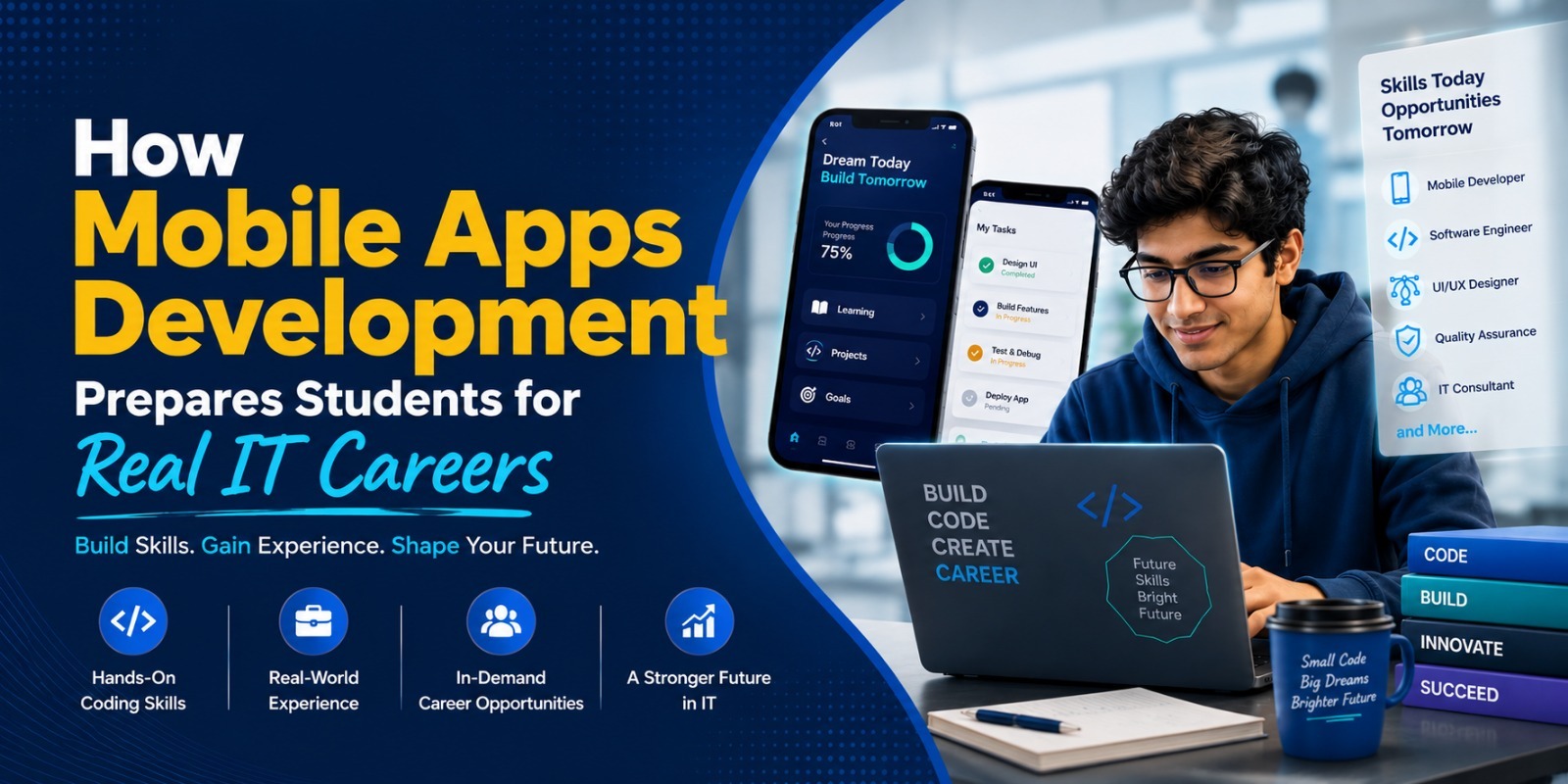
The demand for skilled mobile application developers continues to grow as businesses across industries rely on mobile apps to connect with customers, improve services, and streamline operations. For students planning to enter the IT industry, learning Mobile Apps Development is no longer just an additional skill-it has become a valuable career opportunity.
However, securing a role in today's competitive job market requires more than theoretical knowledge. Employers look for candidates who can develop functional applications, solve real-world problems, and work with modern development tools. A well-structured Mobile Apps Development programme helps students gain practical experience through live projects, coding exercises, and industry-focused learning, enabling them to build the confidence needed for professional software development.
At TCP India, students learn by building real applications while understanding the complete development process, helping them prepare for rewarding careers in the IT industry.
Why Is Mobile Apps Development a Valuable Career Skill?
Mobile applications have become an essential part of everyday life. From banking and shopping to education, healthcare, and entertainment, businesses depend on mobile apps to serve their customers efficiently.
As organisations continue investing in digital solutions, the demand for skilled mobile app developers continues to increase. Learning Mobile Apps Development allows students to build applications that solve practical problems while developing skills that remain relevant across multiple industries.
Some advantages of learning Mobile Apps Development include:
- High demand for skilled developers
- Opportunities across various industries
- Continuous learning and career growth
- Practical and creative problem-solving
- Global career opportunities
Students who understand the complete app development lifecycle are well-positioned to build successful careers in software development.
What Do Students Learn During Mobile Apps Development Training?
A comprehensive Mobile Apps Development programme focuses on both technical knowledge and practical implementation.
Students typically learn:
Programming Fundamentals
A strong understanding of programming concepts helps students build logical, efficient, and maintainable applications.
User Interface Development
Students learn how to create intuitive and visually appealing mobile interfaces that provide a smooth user experience.
Database Integration
Applications often require storing and managing user information. Students understand how mobile applications communicate with databases securely and efficiently.
API Integration
Modern mobile applications interact with external services such as payment gateways, maps, notifications, and authentication systems. Learning API integration helps students build feature-rich applications.
Testing and Debugging
Before deployment, every application must be tested thoroughly. Students learn debugging techniques and testing methods to improve application quality and performance.
How Do Live Projects Prepare Students for Real IT Jobs?
One of the biggest differences between learning theory and becoming an IT professional is practical experience.
Working on live projects helps students understand how software is developed in professional environments.
Benefits of project-based learning include:
Understanding Real Business Requirements
Students learn to analyse project requirements and develop applications that address genuine business challenges.
Improving Problem-Solving Skills
Every development project presents unique technical challenges. Finding practical solutions strengthens analytical thinking and coding abilities.
Building Team Collaboration Skills
Software development often involves working with designers, testers, and developers. Live projects help students understand collaborative workflows and effective communication.
Creating a Professional Portfolio
Every completed project becomes evidence of practical skills. A portfolio showcasing functional mobile applications gives students greater confidence during placements and technical interviews.
Which Projects Help Students Become Industry-Ready?
Building different types of applications enables students to explore various aspects of Mobile Apps Development while strengthening their technical foundation.
Some practical projects include:
Project | Skills Developed |
Food Delivery App | User authentication, order management, API integration |
E-commerce Application | Product catalogue, payment workflow, database management |
Hospital Appointment App | Scheduling, notifications, secure data handling |
Student Management App | User roles, database operations, reporting |
Chat Application | Real-time communication, authentication, backend integration |
These projects help students understand how mobile applications are planned, developed, tested, and maintained while creating a strong portfolio for future career opportunities.
Essential Tools Every Mobile App Developer Should Learn

Building a successful mobile application requires more than programming knowledge. Students should also become familiar with the tools and technologies commonly used by professional developers throughout the development process.
Some essential tools include:
- Android Studio for Android application development and testing.
- Flutter for building cross-platform applications from a single codebase.
- Firebase for user authentication, cloud storage, and push notifications.
- Git and GitHub for version control and collaborative development.
- Figma for understanding user interface designs and creating app prototypes.
Learning these tools helps students adapt to modern development practices and prepares them for real workplace environments.
Career Opportunities After Learning Mobile Apps Development
The growing use of smartphones has created exciting career opportunities for students with mobile application development skills. Businesses, start-ups, and technology companies are constantly looking for developers who can build reliable and user-friendly applications.
Some popular career options include:
- Mobile Application Developer
- Android App Developer
- Flutter Developer
- Cross-Platform App Developer
- Software Developer
- Full Stack Developer
- UI Developer
- Application Support Engineer
With practical experience and continuous learning, students can also progress into senior development, technical leadership, or freelance opportunities.
How TCP India Helps Students Become Industry-Ready
Learning technical concepts is only one part of becoming a successful developer. At TCP India, students receive practical exposure that helps them understand how mobile applications are developed in professional environments.
Industry-Oriented Learning
The curriculum is designed to reflect current industry practices, ensuring students gain knowledge that is relevant to today's IT sector.
Practical Project Experience
Students work on multiple applications that strengthen their understanding of mobile development, problem-solving, and software implementation.
Interactive Learning Environment
Training sessions encourage students to participate actively through coding exercises, project discussions, and practical assignments, helping them build confidence in applying their knowledge.
Career Preparation Support
Students also receive guidance on portfolio development, interview preparation, and professional communication, enabling them to present their skills effectively during recruitment processes.
Why Practical Learning Makes the Difference
Technical knowledge forms the foundation of a developer's career, but practical experience is what helps students stand out during placements and interviews.
By working on real applications, students learn how to:
- Analyse user requirements.
- Build applications from concept to deployment.
- Test and improve application performance.
- Collaborate on development projects.
- Apply industry-standard development practices.
These experiences not only improve technical abilities but also help students develop the confidence required to begin their careers in the IT industry.
Conclusion
Mobile Apps Development is more than learning how to create mobile applications-it is about developing the practical skills, technical knowledge, and problem-solving abilities required in today's IT industry. Through hands-on projects and industry-focused learning, students gain valuable experience that prepares them for real-world software development roles.
At TCP India, a trusted IT training institute in Mehsana, Gujarat, students receive practical training, project-based learning, and guidance that helps them become confident and industry-ready professionals. If you're planning to build a successful career in app development, explore our Mobile Apps Development programme and take the first step towards your future in the IT industry.
To understand how practical learning strengthens technical skills and prepares students for successful careers, you can also read our blog How Practical Training Makes Students Job-Ready.
Frequently Asked Questions
1. What is mobile app development?
Mobile app development is the process of designing, developing, testing, and maintaining applications for smartphones and tablets using modern programming languages, frameworks, and development tools.
2. Is it a good career choice?
Yes. As businesses continue to invest in digital solutions, skilled mobile app developers are in demand across industries such as healthcare, education, finance, retail, and technology.
3. What skills do students learn during the course?
Students learn programming fundamentals, user interface development, database integration, API integration, testing, debugging, and project development using industry-standard tools.
4. Do students work on live projects during the training?
Yes. Practical projects help students apply their knowledge, strengthen problem-solving skills, and build a professional portfolio that showcases their technical abilities.
5. What career opportunities are available after completing the course?
Students can pursue roles such as Mobile Application Developer, Android App Developer, Flutter Developer, Software Developer, Cross-Platform Developer, or Full Stack Developer.
6. Why choose TCP India for mobile app development training in Mehsana?
TCP India provides industry-oriented learning, practical project experience, experienced mentorship, and career preparation support to help students become industry-ready professionals.
Leave Comments
Recent Post
Essential Database Skills Students Need for a Career in Tech
Sep 29, 2026

Essential Data Analysis Skills Students Need for a Career in Tech
Sep 21, 2026
Essential Skills Students Need to Start a Career in Mobile App Development
Sep 15, 2026
Skills Students Can Build Through MEAN Stack Development
Sep 07, 2026
What Students Can Build with a Python Web Development Course
Aug 24, 2026
Skills Students Build Through a Full Stack Python Developer Course
Aug 18, 2026
UI/UX Design vs UI/UX Development: What Is the Difference
Aug 11, 2026
What Can You Build with a Full Stack Website Development Course
Aug 05, 2026