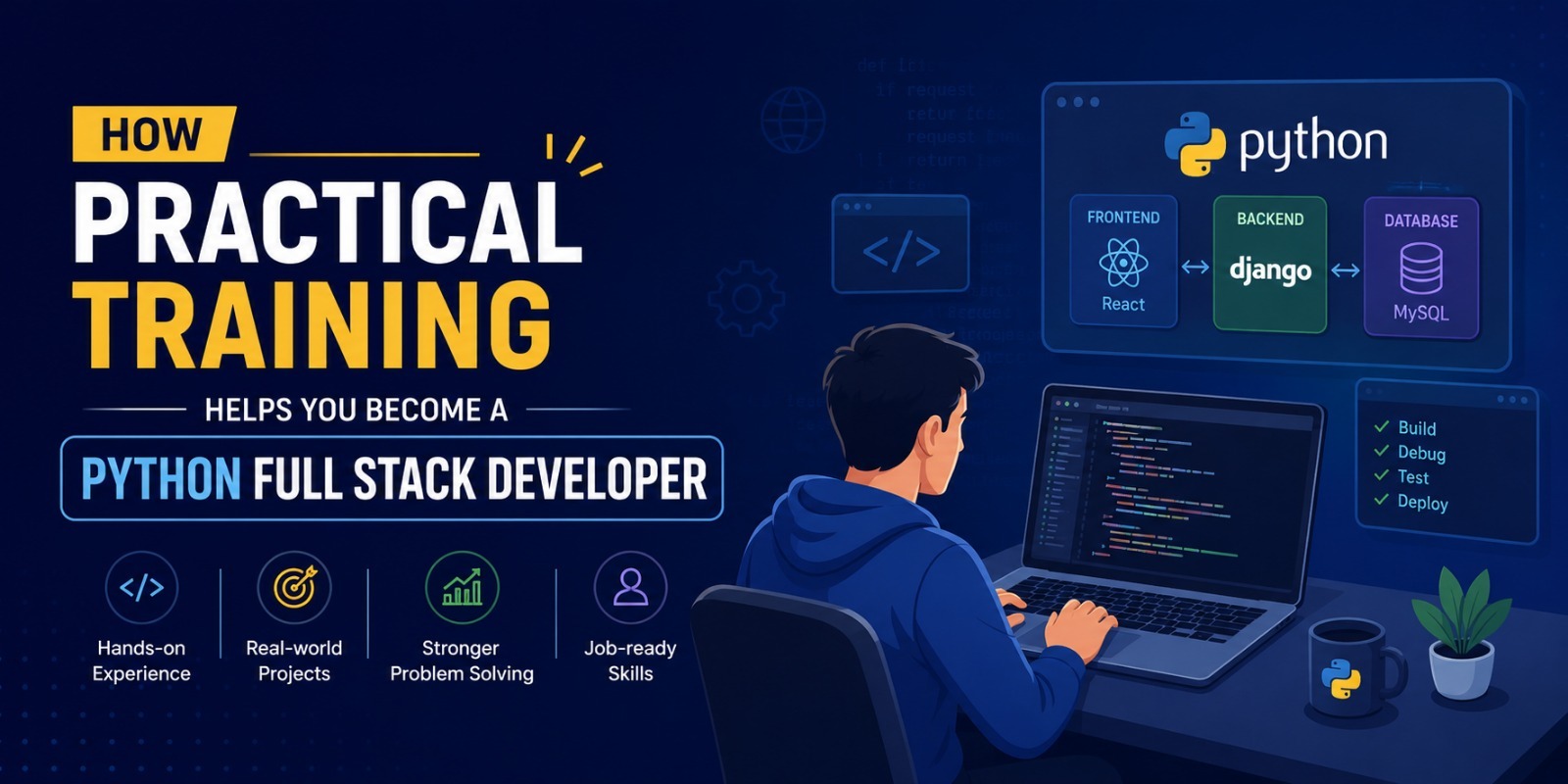
How Practical Training Helps You Become a Python Full Stack Developer
Introduction
Today's IT industry values professionals who can solve real-world problems, develop applications efficiently, and adapt to changing technologies. While learning programming concepts is important, employers are increasingly looking for candidates who can apply their knowledge through practical experience. This is why becoming a Python Full Stack Developer involves much more than understanding coding theory.
Practical training gives students the opportunity to build complete web applications, work on real projects, and understand how software is developed in professional environments. From designing user interfaces to managing databases and integrating backend services, every stage of learning contributes to building technical confidence and industry-ready skills.
At TCP India, students receive hands-on training that combines technical knowledge with practical implementation, helping them prepare for rewarding careers in software development.
Why Is Practical Training Important for a Python Full Stack Developer?
Learning programming through books or video tutorials provides a strong foundation, but practical training transforms theoretical knowledge into real technical skills.
A Python Full Stack Developer is expected to build complete web applications, troubleshoot issues, and work with multiple technologies. These abilities can only be developed through consistent practice and project-based learning.
Practical training helps students:
- Understand real software development processes.
- Improve coding accuracy and efficiency.
- Learn how different technologies work together.
- Develop confidence in solving technical challenges.
- Prepare for technical interviews with practical experience.
Students who regularly practise coding and application development are generally better prepared for workplace responsibilities than those who rely only on theoretical learning.
What Practical Skills Do Students Learn During Training?
A well-designed training programme focuses on the complete software development lifecycle rather than individual programming concepts. Students gradually develop the technical and professional skills required to work on real projects.
Front-End Development
Students learn to build responsive and interactive user interfaces that provide a smooth user experience across different devices.
Back-End Development
Training includes developing server-side logic, handling user requests, managing authentication, and processing application data securely.
Database Management
Students understand how applications store, organise, and retrieve information efficiently using structured database systems.
API Integration
Modern web applications communicate with various external services. Practical training helps students learn how to integrate APIs to add features such as authentication, payment processing, and notifications.
Testing and Debugging
Writing code is only one part of software development. Students also learn how to identify errors, test application functionality, and improve software performance before deployment.
How Live Projects Strengthen Learning
One of the biggest advantages of practical training is the opportunity to work on projects that simulate real software development environments.
Instead of completing isolated coding exercises, students develop complete applications that improve both their technical understanding and problem-solving abilities.
Some common project examples include:
Project | Skills Developed |
Student Management System | User authentication, database management, CRUD operations |
E-commerce Website | Product management, shopping cart, payment workflow |
Online Job Portal | User registration, search functionality, backend integration |
Inventory Management System | Data handling, reporting, admin dashboard |
Task Management Application | Project organisation, API integration, user management |
Working on these projects helps students understand how software is planned, developed, tested, and maintained while building a professional portfolio that showcases their practical abilities.
How Practical Training Improves Problem-Solving Skills

Successful software developers do much more than write code-they analyse requirements, identify challenges, and create effective solutions.
Practical training exposes students to real development scenarios where they learn to think critically and solve technical problems independently.
Through continuous practice, students learn how to:
- Break complex problems into smaller tasks.
- Debug application errors systematically.
- Improve application performance.
- Optimise database queries.
- Write clean and maintainable code.
- Adapt solutions based on project requirements.
These experiences help students develop the analytical mindset that employers value in software development roles.
Why Employers Prefer Candidates with Practical Experience
Employers today assess candidates based on their ability to contribute to real projects rather than simply recalling theoretical concepts. During technical interviews, recruiters often ask candidates to explain projects they have built, the challenges they faced, and how they solved them.
Practical training helps students demonstrate these abilities with confidence because they have already worked on applications that reflect real development scenarios.
Recruiters generally look for candidates who can:
- Build complete web applications from start to finish.
- Understand both front-end and back-end development.
- Work with databases and APIs effectively.
- Identify and resolve technical issues.
- Collaborate with team members using professional development practices.
Students with practical project experience often have an advantage because they can showcase their skills through completed work instead of relying only on academic qualifications.
How TCP India Helps Students Become Industry-Ready
At TCP India, practical learning is integrated throughout the training programme to help students prepare for real software development careers.
Industry-Focused Curriculum
The course content is regularly updated to match current industry requirements, ensuring students learn technologies and development practices that employers expect.
Project-Based Learning
Students build multiple applications throughout the course, allowing them to apply theoretical concepts in practical situations while strengthening their technical knowledge.
Continuous Mentor Support
Students receive regular guidance throughout their learning journey. Trainers encourage them to analyse coding challenges, improve their programming approach, and understand how software is developed in professional environments through practical discussions and project reviews.
Career Preparation
Along with technical training, students receive guidance on portfolio building, interview preparation, and presenting their projects confidently during placement opportunities.
Career Opportunities After Becoming a Python Full Stack Developer
Practical training opens the door to a wide range of career opportunities within the software development industry.
Some popular roles include:
- Python Full Stack Developer
- Python Developer
- Web Application Developer
- Back-End Developer
- Software Developer
- Full Stack Developer
- Application Support Engineer
As students continue gaining experience and working on advanced projects, they can explore specialised areas such as cloud computing, DevOps, artificial intelligence, and software architecture.
Why Continuous Learning Matters
Technology evolves rapidly, and successful developers continue learning throughout their careers. Practical training builds a strong foundation that makes it easier for students to adapt to new tools, frameworks, and industry practices.
Developing the habit of continuous learning helps students:
- Stay updated with emerging technologies.
- Improve problem-solving abilities.
- Build more efficient applications.
- Increase career growth opportunities.
- Remain competitive in the evolving IT industry.
This mindset enables students to build long-term careers rather than simply securing their first job.
Conclusion
Becoming a Python Full Stack Developer requires more than learning programming concepts-it requires practical experience, consistent practice, and exposure to real software development projects. Practical training helps students build technical confidence, improve problem-solving skills, and understand how professional applications are developed from planning to deployment.
At TCP India, a trusted IT training institute in Mehsana, Gujarat, students gain industry-focused learning, hands-on project experience, and continuous mentorship that prepares them for successful careers in software development. If you are looking to build practical skills that employers value, explore our Python Full Stack Course and take the first step towards becoming an industry-ready Python Full Stack Developer.
To understand why hands-on learning plays a crucial role in career success, you can also read our blog How Practical Training Makes Students Job-Ready. Contact TCP India today to begin your journey towards a rewarding IT career.
Frequently Asked Questions
1. What does a Python Full Stack Developer do?
A Python Full Stack Developer designs, develops, tests, and maintains complete web applications by working on both the front-end and back-end while managing databases and application functionality.
2. Why is practical training important for aspiring developers?
Practical training helps students apply theoretical concepts through real projects, improve problem-solving skills, and gain the confidence needed to work in professional software development environments.
3. What projects do students build during Python Full Stack training?
Students typically work on projects such as student management systems, e-commerce websites, job portals, inventory management systems, and task management applications to strengthen their practical skills.
4. What career opportunities are available after completing Python Full Stack training?
Students can pursue careers as Python Full Stack Developers, Python Developers, Software Developers, Web Application Developers, Back-End Developers, and Full Stack Developers.
5. How does TCP India help students become job-ready?
TCP India provides practical training, project-based learning, mentor guidance, portfolio development support, and career preparation to help students build the skills required for today's IT industry.
6. Can beginners become Python Full Stack Developers?
Yes. With structured learning, regular practice, and hands-on projects, beginners can gradually develop the technical skills required to become successful Python Full Stack Developers.
Leave Comments
Recent Post
Essential Database Skills Students Need for a Career in Tech
Sep 29, 2026

Essential Data Analysis Skills Students Need for a Career in Tech
Sep 21, 2026
Essential Skills Students Need to Start a Career in Mobile App Development
Sep 15, 2026
Skills Students Can Build Through MEAN Stack Development
Sep 07, 2026
What Students Can Build with a Python Web Development Course
Aug 24, 2026
Skills Students Build Through a Full Stack Python Developer Course
Aug 18, 2026
UI/UX Design vs UI/UX Development: What Is the Difference
Aug 11, 2026
What Can You Build with a Full Stack Website Development Course
Aug 05, 2026