What Can You Build with a Full Stack Website Development Course
Introduction
In today's digital world, almost every business, school, hospital, and organisation relies on a professional website to connect with customers and deliver services online. As the demand for skilled web developers continues to grow, students are looking for courses that offer practical learning instead of just theoretical knowledge. A Full Stack Website Development Course helps students understand how complete websites are designed, developed, and maintained while preparing them for real-world software development.
Rather than focusing only on programming concepts, practical training allows students to build fully functional websites, solve real development challenges, and gain experience with modern development tools. At TCP India, a leading IT training institute in Mehsana, Gujarat, students work on industry-oriented projects that strengthen both their technical knowledge and problem-solving abilities, helping them prepare for successful careers in the IT industry.
Why Does Building Real Websites Matter?
Learning programming is only the beginning of becoming a successful developer. Employers are more interested in candidates who can apply their knowledge to create websites that solve real business problems.
Building complete websites during training helps students:
- Understand how professional websites are planned and developed.
- Apply programming concepts in practical situations.
- Improve logical thinking and problem-solving skills.
- Gain confidence by working on real projects.
- Build a professional portfolio for interviews.
When students develop websites from scratch, they experience every stage of the development process, making them better prepared for workplace responsibilities.
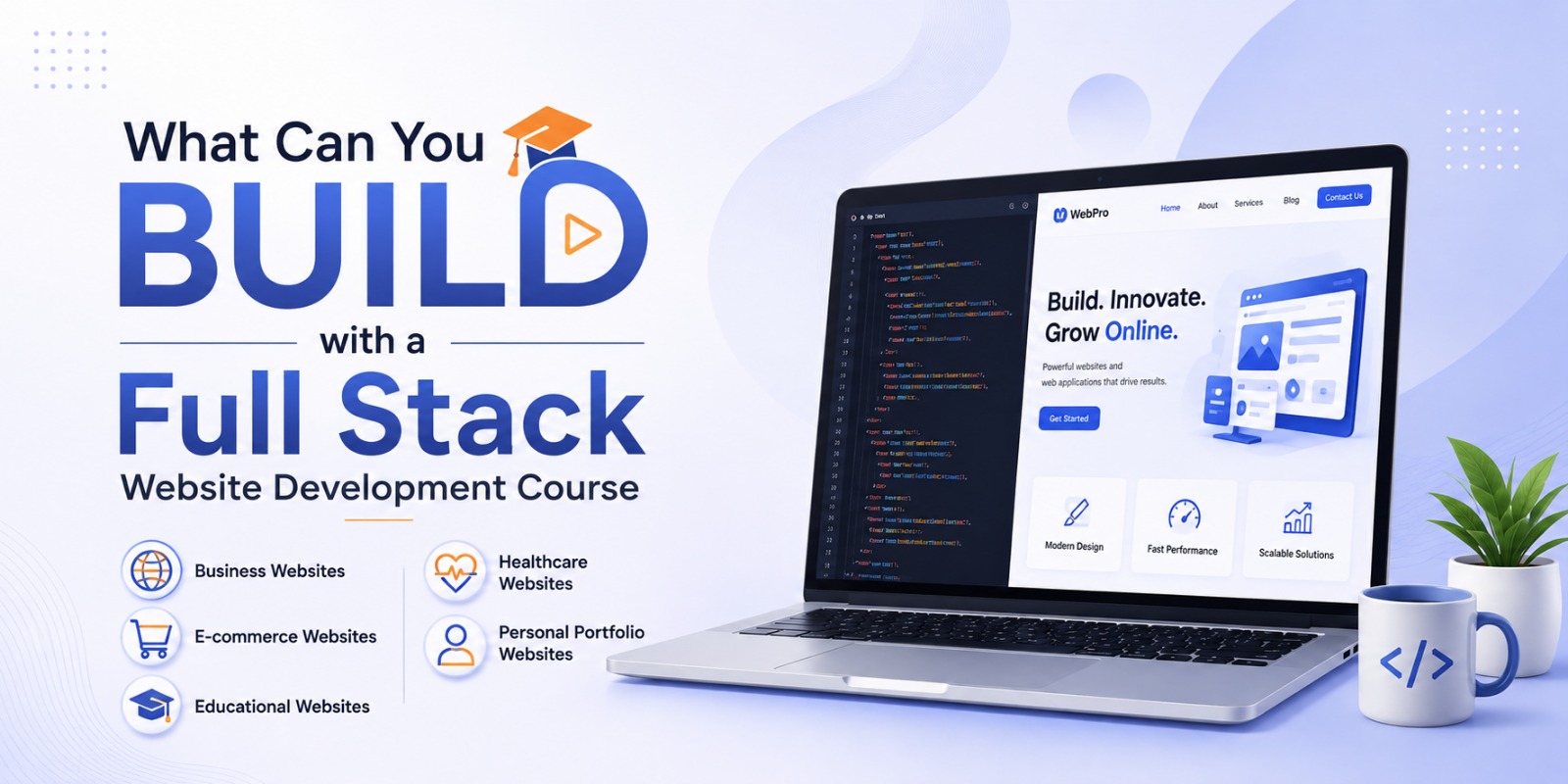
What Can You Build with a Full Stack Website Development Course?
One of the biggest advantages of learning through practical projects is the opportunity to create different types of websites that are commonly used across industries.
Business Websites
Students learn to develop professional business websites that showcase company information, products, services, enquiry forms, and contact details. These projects help students understand responsive layouts, navigation, and user-friendly design.
E-commerce Websites
Online shopping continues to grow every year, making e-commerce development one of the most valuable skills for aspiring developers.
Students learn how to build features such as:
- Product catalogues
- Shopping carts
- User registration and login
- Order management
- Secure payment integration
- Customer dashboards
These projects demonstrate how multiple technologies work together to create a complete online shopping experience.
Educational Websites
Educational institutions increasingly depend on digital platforms to manage learning and communication.
Students may build websites that include:
- Student registration
- Course information
- Admission enquiry forms
- Learning resources
- Faculty profiles
- Notice boards
These projects help students understand how websites can organise information efficiently while providing a better user experience.
Healthcare Websites
Healthcare organisations require websites that are informative, easy to navigate, and accessible to patients.
Students gain experience by developing features such as:
- Doctor profiles
- Appointment request forms
- Service information
- Health awareness pages
- Contact and location details
Working on healthcare projects helps students understand how user-focused design improves accessibility and communication.
Personal Portfolio Websites
Every developer benefits from having a professional online portfolio.
Students create personal portfolio websites that showcase:
- Technical skills
- Academic projects
- Certifications
- Internship experience
- Contact information
- Professional achievements
A well-designed portfolio becomes an important tool during placements and technical interviews.
What Technologies Will Students Learn While Building Websites?

A Full Stack Website Development Course introduces students to the technologies required for developing complete web applications rather than individual webpages.
Students gain practical exposure to:
Front-End Development
Students learn to create responsive and interactive interfaces that deliver a smooth experience across desktops, tablets, and smartphones.
Back-End Development
They understand how websites process user requests, manage business logic, and securely handle application data.
Database Management
Training includes organising, storing, and retrieving information efficiently to support dynamic websites and web applications.
API Integration
Students learn how different software systems communicate by integrating APIs for features such as authentication, notifications, and third-party services.
Testing and Debugging
Through practical exercises, students learn to identify coding issues, improve website functionality, and verify that applications perform as expected before they are made available to users.
How Practical Projects Improve Technical Skills
Building multiple projects allows students to strengthen skills that employers expect from professional developers.
Through continuous practical work, students learn to:
- Write clean and maintainable code.
- Improve logical thinking.
- Debug technical issues effectively.
- Understand project planning.
- Collaborate using modern development practices.
- Develop confidence while presenting completed projects.
Instead of simply completing coding exercises, students gradually understand how complete websites are planned, developed, tested, and improved based on user requirements.
How Live Projects Prepare You for Real Client Work
One of the biggest differences between classroom learning and professional software development is working on projects that reflect real client requirements. A Full Stack Website Development Course allows students to build projects that simulate actual business scenarios, helping them understand how websites are developed from concept to completion.
During practical training, students learn how to:
- Analyse project requirements.
- Plan website structure before development.
- Develop responsive and user-friendly interfaces.
- Connect the front end with the back end.
- Test website functionality before deployment.
- Improve websites based on user feedback.
This practical approach helps students become familiar with professional development workflows and prepares them for the expectations of the IT industry.
What Skills Do Employers Look for in Full Stack Developers?
Recruiters today look beyond academic qualifications. They want candidates who can demonstrate practical knowledge, problem-solving abilities, and the confidence to work on real projects.
Some of the skills employers value include:
Technical Skills
Students should understand:
- Front-end development
- Back-end development
- Database management
- API integration
- Responsive website development
- Testing and debugging
Problem-Solving Ability
Developers regularly face technical challenges while building websites. Employers appreciate candidates who can analyse problems, identify the cause, and implement effective solutions.
Project Experience
Candidates who have completed multiple practical projects often stand out during interviews because they can explain their development process and demonstrate their technical abilities.
Team Collaboration
Website development is usually a team effort. Learning to communicate ideas, understand project requirements, and collaborate effectively prepares students for professional work environments.
How TCP India Turns Learning into Real Development Experience
At TCP India, students learn through a practical and industry-oriented approach that focuses on developing both technical knowledge and real-world experience.
Industry-Relevant Curriculum
The course content is updated regularly to reflect current web development practices and industry requirements, ensuring students learn skills that remain relevant.
Practical Project-Based Learning
Students work on multiple website development projects throughout the course, allowing them to apply classroom concepts in practical situations and strengthen their confidence.
Continuous Mentor Guidance
Rather than simply completing assignments, students receive regular feedback from experienced trainers who help them improve their coding practices, understand project requirements, and build better development habits through practical learning.
Career Preparation Support
Along with technical training, students receive guidance on portfolio development, interview preparation, and presenting projects professionally, helping them prepare for placement opportunities.
Where Can a Full Stack Website Development Course Take Your Career?
The demand for skilled website developers continues to grow as businesses across industries expand their digital presence.
After completing a Full Stack Website Development Course, students can explore roles such as:
- Full Stack Developer
- Web Developer
- Front-End Developer
- Back-End Developer
- Software Developer
- Website Developer
- Junior Application Developer
With continuous learning and practical experience, students can further specialise in cloud technologies, software architecture, DevOps, or modern web frameworks as their careers progress.
Conclusion
A Full Stack Website Development Course provides much more than technical knowledge. It allows students to build professional websites, work on practical projects, and develop the confidence required to solve real business challenges. Through consistent hands-on learning, students strengthen their technical skills while understanding how complete websites are planned, developed, tested, and maintained.
At TCP India, a trusted IT training institute in Mehsana, Gujarat, students receive industry-focused training, practical project experience, and continuous mentorship to help them become confident and job-ready web developers. If you want to build websites that reflect real industry standards, explore our Full Stack Website Development Course and take the first step towards a successful IT career.
To learn why practical experience plays such an important role in career success, you can also read our blog How Practical Training Makes Students Job-Ready. Contact TCP India today to begin your journey towards becoming an industry-ready developer.
Frequently Asked Questions
1. What can students build in a Full Stack Website Development Course?
Students can build business websites, e-commerce platforms, educational websites, healthcare websites, portfolio websites, and admin dashboards while gaining practical development experience.
2. Is a Full Stack Website Development Course suitable for beginners?
Yes. A structured course helps beginners learn web development step by step through practical projects, making it suitable for students with little or no prior experience.
3. Why are live projects important during website development training?
Live projects help students apply theoretical concepts, improve problem-solving skills, and gain practical experience that employers value during technical interviews.
4. Which job roles can you pursue after learning Full Stack Website Development?
Students can pursue careers as Full Stack Developers, Web Developers, Software Developers, Front-End Developers, Back-End Developers, and Website Developers.
5. How does TCP India prepare students for the IT industry?
TCP India combines practical training, project-based learning, mentor guidance, portfolio development, and career preparation to help students become industry-ready professionals.
6. Why should students choose a Full Stack Website Development Course?
The course helps students develop practical web development skills, build professional projects, and prepare for rewarding careers in the growing IT industry.
Leave Comments
Recent Post
Essential Database Skills Students Need for a Career in Tech
Sep 29, 2026

Essential Data Analysis Skills Students Need for a Career in Tech
Sep 21, 2026
Essential Skills Students Need to Start a Career in Mobile App Development
Sep 15, 2026
Skills Students Can Build Through MEAN Stack Development
Sep 07, 2026
What Students Can Build with a Python Web Development Course
Aug 24, 2026
Skills Students Build Through a Full Stack Python Developer Course
Aug 18, 2026
UI/UX Design vs UI/UX Development: What Is the Difference
Aug 11, 2026
How Practical Training Helps You Become a Python Full Stack Developer
Jul 27, 2026