Essential Skills Students Need to Start a Career in Mobile App Development
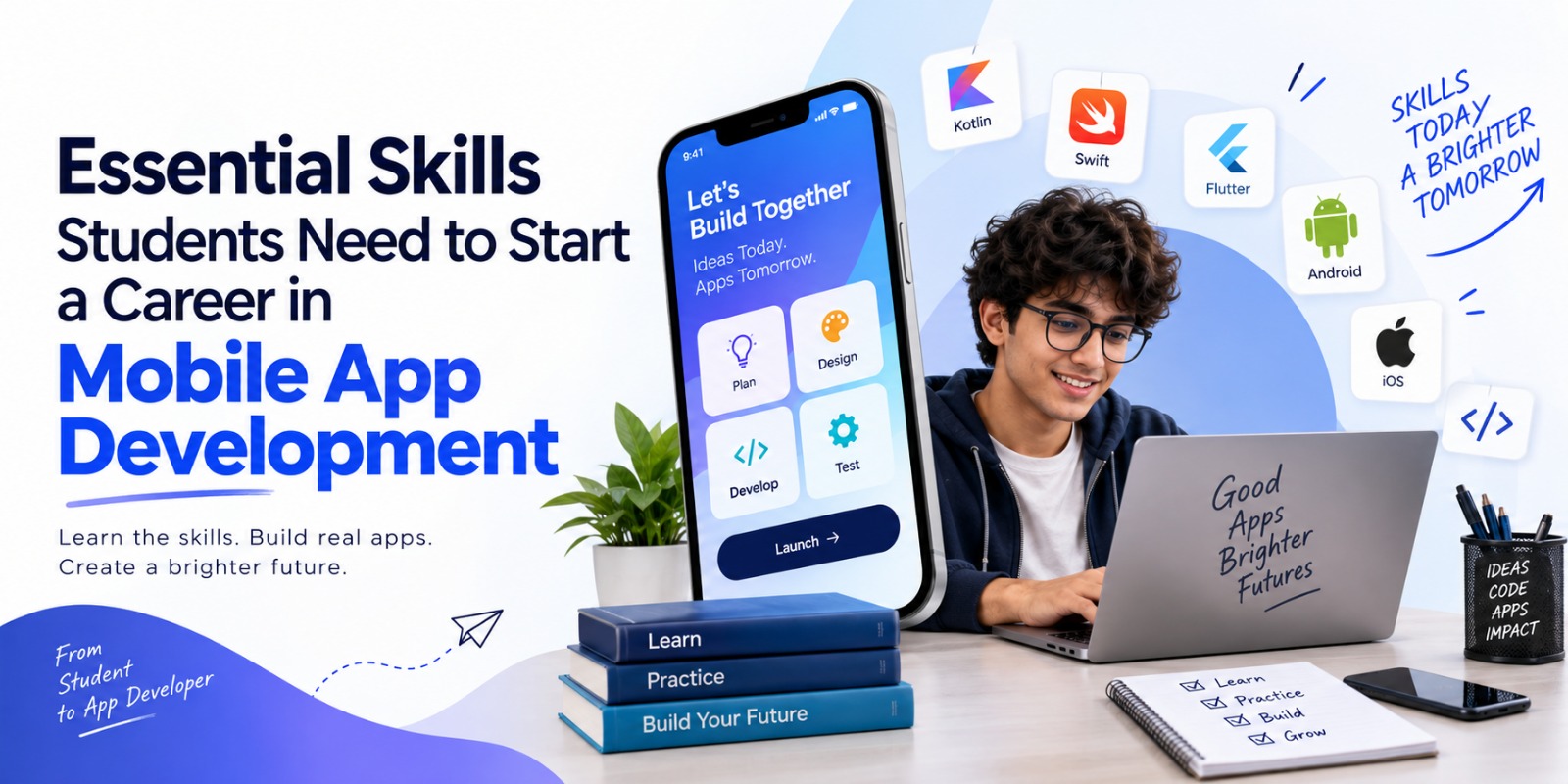
Smartphones have become an important part of everyday life. From shopping and banking to education, healthcare, travel, and entertainment, mobile applications allow people to access services quickly from almost anywhere. Behind every useful application is a development process that combines programming, design, data management, testing, and problem-solving.
For students interested in technology, Mobile Apps Development can provide an opportunity to understand how these digital products are created. However, becoming a mobile app developer involves more than learning how to write code. Students need to develop a combination of technical knowledge, logical thinking, practical experience, and an understanding of how users interact with applications.
Building these skills step by step can provide students with a stronger foundation for beginning a career in mobile application development.
Understanding Programming Fundamentals
Programming fundamentals are the starting point for students entering mobile development.
Before building complete applications, students should understand concepts such as variables, conditions, loops, functions, data types, and object-oriented programming. These concepts help developers organise application logic and solve programming problems systematically.
A strong foundation also makes it easier for students to learn new programming languages, frameworks, and tools as technologies change.
Rather than memorising code, students should focus on understanding why a particular piece of code works and how it contributes to the application.
Learning to Build User-Friendly Interfaces
A mobile application should not only function correctly; it should also be easy for users to understand.
Students therefore need basic knowledge of user interface development. They should understand how different elements such as buttons, menus, forms, navigation bars, images, and content sections work together on a mobile screen.
During practical learning, students can develop skills in:
- Creating structured app screens
- Building navigation between screens
- Designing forms and input fields
- Organising content for smaller screens
- Creating reusable interface components
- Maintaining consistency across an application
Understanding these principles helps students develop applications that are both functional and easier to use.
Working with Mobile Development Frameworks
Modern mobile applications can be developed using different technologies depending on project requirements.
Students entering Mobile Apps Development should become comfortable working with development frameworks and understanding how they simplify the process of creating applications.
Cross-platform frameworks can allow developers to build applications that work across multiple mobile platforms while sharing much of the same codebase.
Working with frameworks also teaches students important concepts such as components, application structure, packages, libraries, navigation, and state management.
The goal for beginners should not be to learn every available framework. Instead, they should develop a strong understanding of one development environment before gradually exploring additional technologies.
Understanding APIs
Many mobile applications need information or functionality from external systems.
A weather application, for example, may retrieve weather information from an external service. Similarly, an e-commerce application may communicate with payment services, product databases, or authentication systems.
This communication often happens through APIs.
Students should learn how applications:
- Send requests
- Receive information
- Work with structured data
- Display retrieved information
- Handle errors
- Connect front-end features with backend services
API knowledge enables students to move beyond basic applications and start creating more practical, feature-rich projects.
Developing Database Skills
Applications often need to store information.
A shopping application may store customer details and orders, while a student application might manage profiles, courses, attendance, or assignments.
Understanding databases helps students learn how application information is created, retrieved, updated, and managed.
Students should understand concepts such as data structure, database operations, user information, application records, and the connection between an application and its database.
These skills become increasingly important as students begin working on larger and more complex projects.
Building Problem-Solving Skills
Mobile application development frequently involves challenges that do not have an immediate solution.
An application may fail to display information correctly. A button might not perform the expected action. An API request could fail, or the application might behave differently on different devices.
Students therefore need to develop the ability to investigate problems rather than simply searching for ready-made code.
A good problem-solving process involves understanding the issue, identifying possible causes, testing solutions, checking the results, and improving the code when necessary.
Regular coding practice gradually strengthens this ability.
Testing and Debugging Applications
An application that works during development may still contain errors that affect real users.
Testing helps students identify these issues before an application is released.
Students should learn to test important elements such as:
- Navigation
- Forms
- Buttons
- User inputs
- API responses
- Different screen sizes
- Application performance
- Error handling
Debugging is equally important. Students need to learn how to read error messages, identify where problems occur, and correct their code.
These habits help students become more careful and independent developers.
Understanding Version Control

As development projects become larger, managing code properly becomes essential.
Version control tools such as Git allow developers to track changes and maintain different versions of their projects. Platforms such as GitHub can also help students store and present their work.
Learning version control gives students experience with development practices commonly used by professional teams.
It also helps them understand concepts such as repositories, commits, branches, code updates, and collaboration.
For students, GitHub can eventually become part of their professional portfolio as well.
Creating Complete Mobile App Projects
One of the best ways to strengthen development skills is to build applications rather than relying only on individual coding exercises.
Students can begin with smaller projects and gradually work towards more complex applications.
Possible projects include:
- Expense tracker
- Student management application
- Appointment booking application
- Task management app
- Food ordering application
- E-commerce app
- Event management application
- Simple chat application
Each project introduces different development challenges.
For example, an appointment application can teach scheduling and database management, while an e-commerce project can introduce product management, user accounts, APIs, and transaction workflows.
Completing such projects helps students understand how multiple development concepts work together.
Building a Portfolio Around Practical Work
When students start applying for internships or entry-level positions, simply mentioning that they know mobile application development may not demonstrate what they can actually do.
A project portfolio provides practical evidence.
Students can showcase their strongest applications and explain the purpose of each project, technologies used, important features, challenges faced, and solutions implemented.
A portfolio may contain GitHub repositories, screenshots, project descriptions, demonstrations, or live application links where appropriate.
The objective is not to have dozens of projects. A few well-developed applications that students can confidently explain can be more useful than many unfinished projects.
Developing Communication and Teamwork Skills
Professional application development is rarely an individual process.
Developers may work with UI/UX designers, backend developers, testers, project managers, and clients. Students therefore need to learn how to communicate technical ideas and understand project requirements.
Team projects can help students practise:
- Discussing requirements
- Dividing development tasks
- Reporting progress
- Reviewing work
- Receiving feedback
- Explaining technical decisions
These skills help students prepare for the collaborative nature of professional software development.
Preparing for a Career in Mobile Development
Learning technical concepts is only one part of career preparation.
Students should also understand how to present their skills professionally. This can include maintaining a portfolio, preparing a clear resume, practising technical interviews, improving communication skills, and being able to explain their projects confidently.
Possible entry-level career paths may include roles such as:
- Mobile Application Developer
- Android Developer
- Flutter Developer
- Cross-Platform Application Developer
- Junior Software Developer
- Application Support Developer
The exact role students pursue can depend on the technologies they learn, their project experience, and their individual interests.
Conclusion
Starting a career in mobile application development requires more than learning a programming language. Students need a combination of programming fundamentals, interface development, APIs, databases, debugging, testing, version control, and practical project experience.
Developing these skills through regular practice can help students understand the complete application development process and gradually become more confident in building functional mobile applications.
TCP India focuses on practical and career-oriented IT learning that helps students move beyond theoretical concepts and apply their knowledge through hands-on development. Through structured learning, practical exercises, projects, and exposure to modern development practices, students can strengthen the skills required to begin exploring opportunities in the mobile application development field.
Career preparation is also an important part of becoming ready for entry-level IT opportunities. Students who are beginning to showcase their technical skills can read How to Build a Strong Resume as an IT Fresher to understand how projects, skills, and practical experience can be presented more effectively.
With consistent practice and the right learning approach, students can turn their interest in mobile technology into practical development skills and build a strong foundation for their future in the IT industry.
Frequently Asked Questions
What skills should a beginner learn for mobile app development?
Beginners should develop programming fundamentals, interface development, database knowledge, API integration, debugging, testing, version control, and problem-solving skills.
Do students need programming knowledge before learning mobile app development?
Basic programming knowledge can make the learning process easier, but beginners can start by developing programming fundamentals before progressing to application development concepts.
Why are practical projects important for mobile app students?
Projects allow students to combine different concepts within a complete application. They also provide practical work that students can demonstrate through their portfolios.
Why should mobile app developers learn APIs?
APIs allow applications to communicate with external systems and services. Understanding them enables students to build applications with more practical and connected features.
How can students prepare for mobile app development jobs?
Students should focus on technical fundamentals, build practical applications, maintain a portfolio, learn version control, practise problem-solving, and prepare to explain their projects during interviews.
Leave Comments
Recent Post
Essential Database Skills Students Need for a Career in Tech
Sep 29, 2026

Essential Data Analysis Skills Students Need for a Career in Tech
Sep 21, 2026
Skills Students Can Build Through MEAN Stack Development
Sep 07, 2026
What Students Can Build with a Python Web Development Course
Aug 24, 2026
Skills Students Build Through a Full Stack Python Developer Course
Aug 18, 2026
UI/UX Design vs UI/UX Development: What Is the Difference
Aug 11, 2026
What Can You Build with a Full Stack Website Development Course
Aug 05, 2026
How Practical Training Helps You Become a Python Full Stack Developer
Jul 27, 2026