Skills Students Build Through a Full Stack Python Developer Course
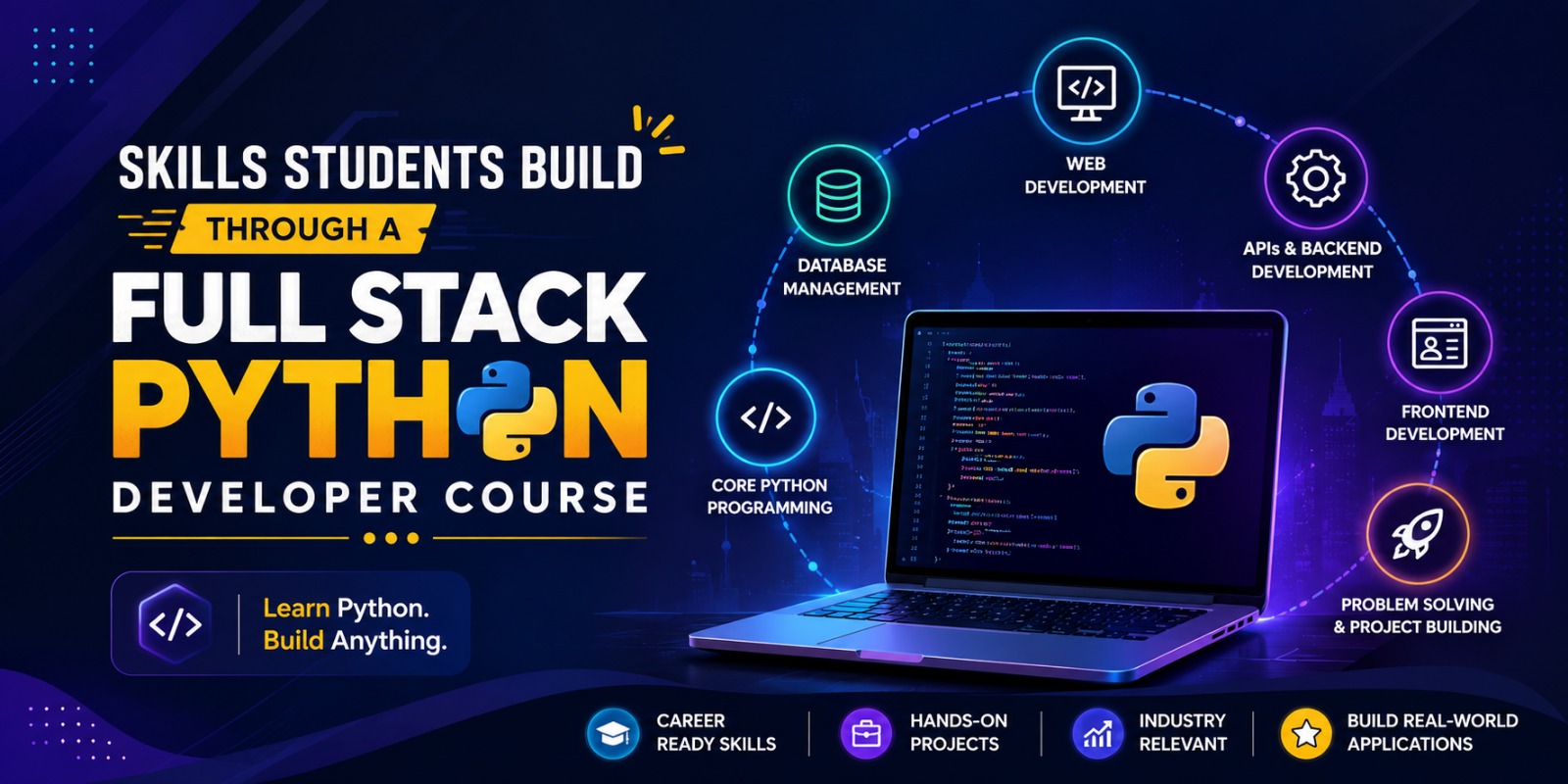
Learning web development requires more than understanding a programming language. Students who want to enter the IT industry need to understand how different parts of a website or application work together. A Full Stack Python Developer Course can provide a structured learning path that covers both front-end and back-end development while helping students gain practical experience.
Python is widely used for server-side programming, while technologies such as HTML, CSS, JavaScript, databases, and APIs contribute to complete web applications. By learning these areas together, students can understand the development process from creating an interface to managing data and implementing application logic.
For students and beginners planning a career in web development, developing these skills through practical projects can provide a stronger foundation than learning individual technologies separately.
What Does a Full Stack Python Developer Need to Know?
A full-stack developer works across different layers of a web application. This means students need to understand how the visible interface connects with the server, database, and other application components.
A typical learning path may cover:
- Front-end development
- Python programming
- Back-end development
- Database management
- API integration
- Version control
- Testing and debugging
- Deployment fundamentals
Understanding how these components interact helps students approach web development as a complete process rather than as a collection of unrelated technologies.
Which Front-End Skills Do Students Learn?
The front end is the part of a website or application that users directly interact with. Students generally begin by learning the technologies used to structure and style web pages.
HTML
HTML provides the basic structure of web pages. Students learn how content such as headings, forms, images, links, and other elements are organised.
CSS
CSS is used to control the visual presentation of a website. Students can learn about layouts, spacing, typography, responsive designs, and other styling techniques.
JavaScript
JavaScript introduces behaviour and interaction to web pages. Students can use it to create dynamic features and improve how users interact with an application.
These technologies give students a foundation in front-end development before they move deeper into server-side programming.
How Python Supports Back-End Development

Python is an important part of the learning path for a Python Full Stack Developer because it can be used to develop the server-side logic of web applications.
Students can learn how to:
- Write Python programs
- Work with functions and modules
- Handle application logic
- Process user requests
- Manage data
- Connect applications with databases
- Develop server-side functionality
Frameworks such as Django or Flask may also be introduced depending on the learning curriculum.
The goal is not simply to memorise Python syntax. Students need to understand how programming concepts are applied to solve problems within actual web applications.
What Database Skills Are Important for Full Stack Development?
Most modern applications need to store and retrieve information. This makes database knowledge an important part of full-stack learning.
Students can learn concepts such as:
- Creating and managing databases
- Storing application data
- Writing queries
- Retrieving records
- Updating information
- Managing relationships between data
- Connecting databases with applications
Depending on the course structure, students may work with relational databases or other database technologies.
Understanding databases helps students see how information entered through a website can be processed and stored securely on the back end.
Why API Development Matters for Python Developers
APIs allow different parts of a software system to communicate with each other. They are commonly used when a front-end application needs to request or send information to a back-end system.
Students learning a Full Stack Python Developer Course can benefit from understanding:
- What APIs are
- How requests and responses work
- REST API concepts
- Data formats such as JSON
- API integration
- Basic authentication concepts
For example, when a user submits information through a website, an API can help transfer that information to the server for processing.
Learning this process gives students a better understanding of how modern applications operate behind the interface.
How Practical Projects Strengthen Development Skills
Theoretical knowledge becomes more useful when students apply it to projects.
A practical Python Web Development Course can include projects such as:
- Student management systems
- Blog platforms
- E-commerce applications
- Task management tools
- Business dashboards
- Booking systems
While developing these projects, students can practise combining front-end interfaces, Python-based back-end functionality, databases, and APIs.
Projects also give students opportunities to identify errors, improve their code, and understand how individual features contribute to a complete application.
Which Soft Skills Help Students Become Better Developers?
Technical knowledge is only one part of becoming a successful developer. Students also need skills that help them work effectively on projects.
Problem-Solving
Developers regularly encounter technical problems. Learning to break a problem into smaller parts can make complex tasks easier to manage.
Logical Thinking
Programming requires developers to create clear sequences of instructions. Strong logical thinking helps students approach development problems systematically.
Communication
Developers often work with designers, project managers, clients, and other developers. Clear communication helps ensure that requirements are understood correctly.
Time Management
Projects involve multiple tasks and deadlines. Learning to prioritise work helps students manage development assignments more effectively.
These abilities complement the technical skills gained through Python Full Stack Developer Training.
How Students Can Build a Strong Developer Portfolio
A portfolio can help students demonstrate what they can actually create.
Instead of simply listing programming languages, students can showcase projects that explain:
- The purpose of the project
- Technologies used
- Features developed
- Problems solved
- Their contribution
- Screenshots or demonstrations
- GitHub repository where appropriate
For example, a student who develops an e-commerce application can explain how they implemented product management, user authentication, database operations, and order functionality.
This gives potential employers a clearer picture of the student's practical capabilities.
What Additional Skills Can Students Explore?
Once students have developed a foundation in Python and full-stack development, they can gradually explore additional areas.
These may include:
- Git and GitHub
- Cloud deployment
- Software testing
- Authentication and authorisation
- Web security fundamentals
- Responsive development
- Application performance
- Development frameworks
Students do not need to master everything at once. Building a strong foundation first and expanding skills gradually is generally a more effective approach.
Career Paths Students Can Explore
Developing full-stack skills can help students understand several areas of the IT industry.
Depending on their skills and experience, they may explore roles such as:
- Junior Python Developer
- Full Stack Developer
- Python Web Developer
- Back-End Developer
- Front-End Developer
- Web Application Developer
The exact role a student can pursue depends on their technical skills, project experience, portfolio, and employer requirements.
For beginners, focusing on practical development skills and building several meaningful projects can be more valuable than simply collecting certificates.
How TCP India Supports Practical Learning
At TCP India, students can develop programming and web development knowledge through structured learning and practical project activities. The learning process can help students understand how front-end interfaces, Python programming, databases, and back-end functionality work together.
Practical assignments also provide opportunities to apply concepts rather than relying entirely on theoretical learning. For students in Mehsana and nearby areas, this approach can help build a foundation for exploring different career paths within the IT industry.
Students interested in expanding their knowledge can also explore the Python Full Stack Course and related training options to understand which learning path aligns with their career goals.
Conclusion
A Full Stack Python Developer Course can help students develop a broad set of skills required to understand modern web application development. From HTML, CSS, and JavaScript to Python, databases, APIs, and practical project development, students can gradually learn how different components come together to create complete applications.
However, technical knowledge alone is not enough. Problem-solving, logical thinking, communication, and project experience also contribute to becoming a capable developer.
For students planning to enter the IT industry, the most valuable approach is to combine structured learning with practical application. Building real projects, maintaining a portfolio, and continuously improving technical skills can help create a stronger foundation for future development opportunities.
At TCP India in Mehsana, Gujarat, students can explore practical learning opportunities designed to help them develop relevant programming and web development skills. If you are planning to start your journey in full-stack development, choosing a learning path that combines technology knowledge with practical experience can be an important first step.
You can also explore our [How Practical Training Helps You Become a Python Full Stack Developer] to learn more about developing practical skills for an IT career.
Frequently Asked Questions
What skills can students learn through a Full Stack Python Developer Course?
Students can develop skills in front-end technologies, Python programming, back-end development, databases, APIs, version control, testing, and practical web application development.
Is Python enough to become a full-stack developer?
Python is useful for back-end development, but full-stack development generally requires knowledge of front-end technologies, databases, APIs, and other supporting tools.
Do students need coding experience before starting?
Not necessarily. Beginners can start with fundamental programming concepts and gradually build more advanced development skills through structured learning and practice.
Why are projects important for students?
Projects allow students to apply theoretical concepts, solve development problems, practise different technologies, and create portfolio work that demonstrates their abilities.
Can full-stack Python skills help students explore IT careers?
Yes. These skills can provide a foundation for exploring roles such as junior Python developer, full-stack developer, back-end developer, and web application developer, depending on the student's overall capabilities and experience.
What should students include in a developer portfolio?
A portfolio can include completed projects, technologies used, key features, project explanations, screenshots, and relevant GitHub repositories where available.
Leave Comments
Recent Post
Essential Database Skills Students Need for a Career in Tech
Sep 29, 2026

Essential Data Analysis Skills Students Need for a Career in Tech
Sep 21, 2026
Essential Skills Students Need to Start a Career in Mobile App Development
Sep 15, 2026
Skills Students Can Build Through MEAN Stack Development
Sep 07, 2026
What Students Can Build with a Python Web Development Course
Aug 24, 2026
UI/UX Design vs UI/UX Development: What Is the Difference
Aug 11, 2026
What Can You Build with a Full Stack Website Development Course
Aug 05, 2026
How Practical Training Helps You Become a Python Full Stack Developer
Jul 27, 2026